A selection of our work across particle physics, machine learning and quantum computing.
Machine learning · 2026
Making anomaly searches trustworthy
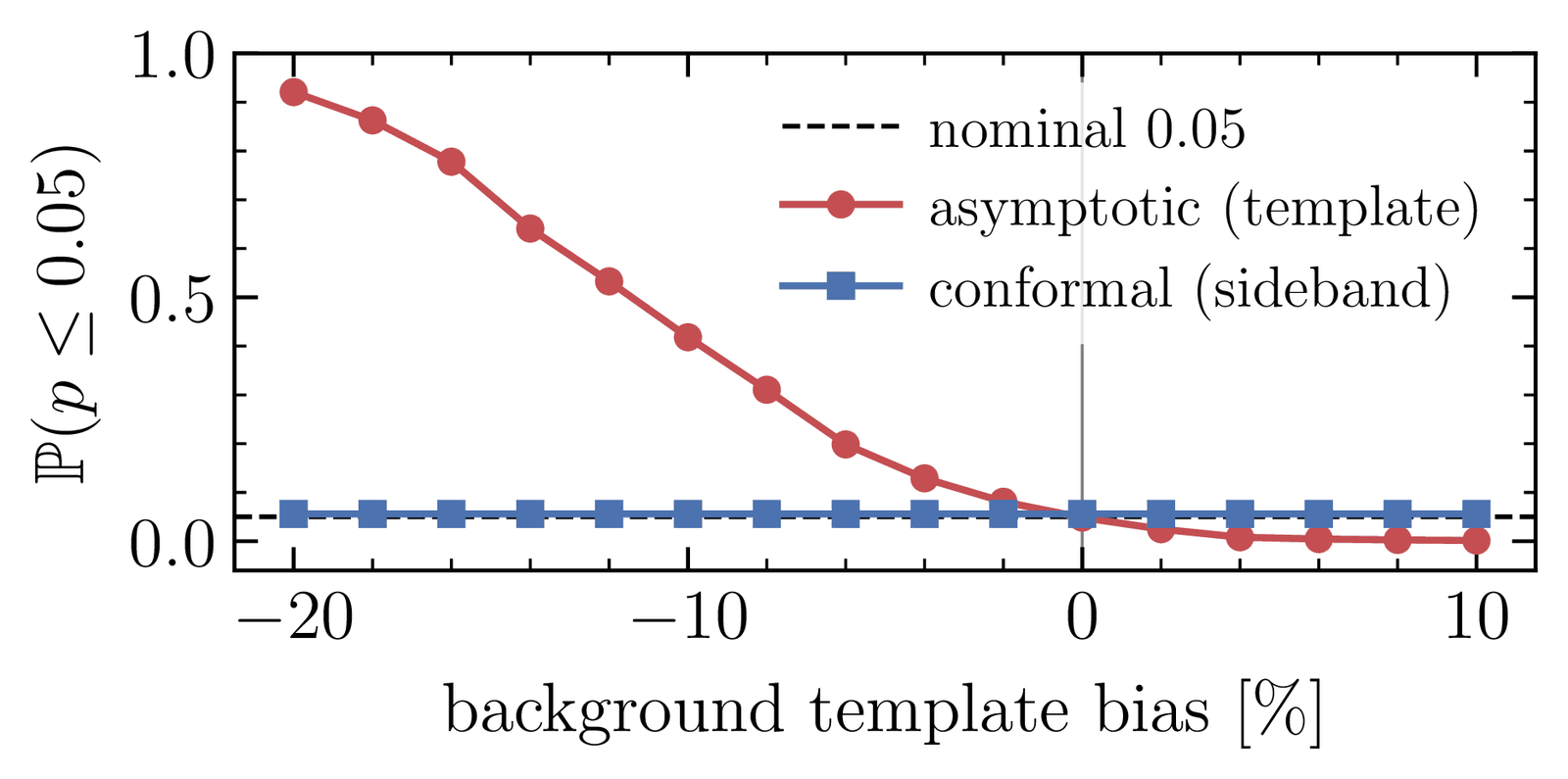
A high anomaly score is only useful if its statistical meaning is reliable. Our conformal calibration approach accounts for background mismodelling and scanning across many search regions, helping distinguish potential discoveries from false alarms.
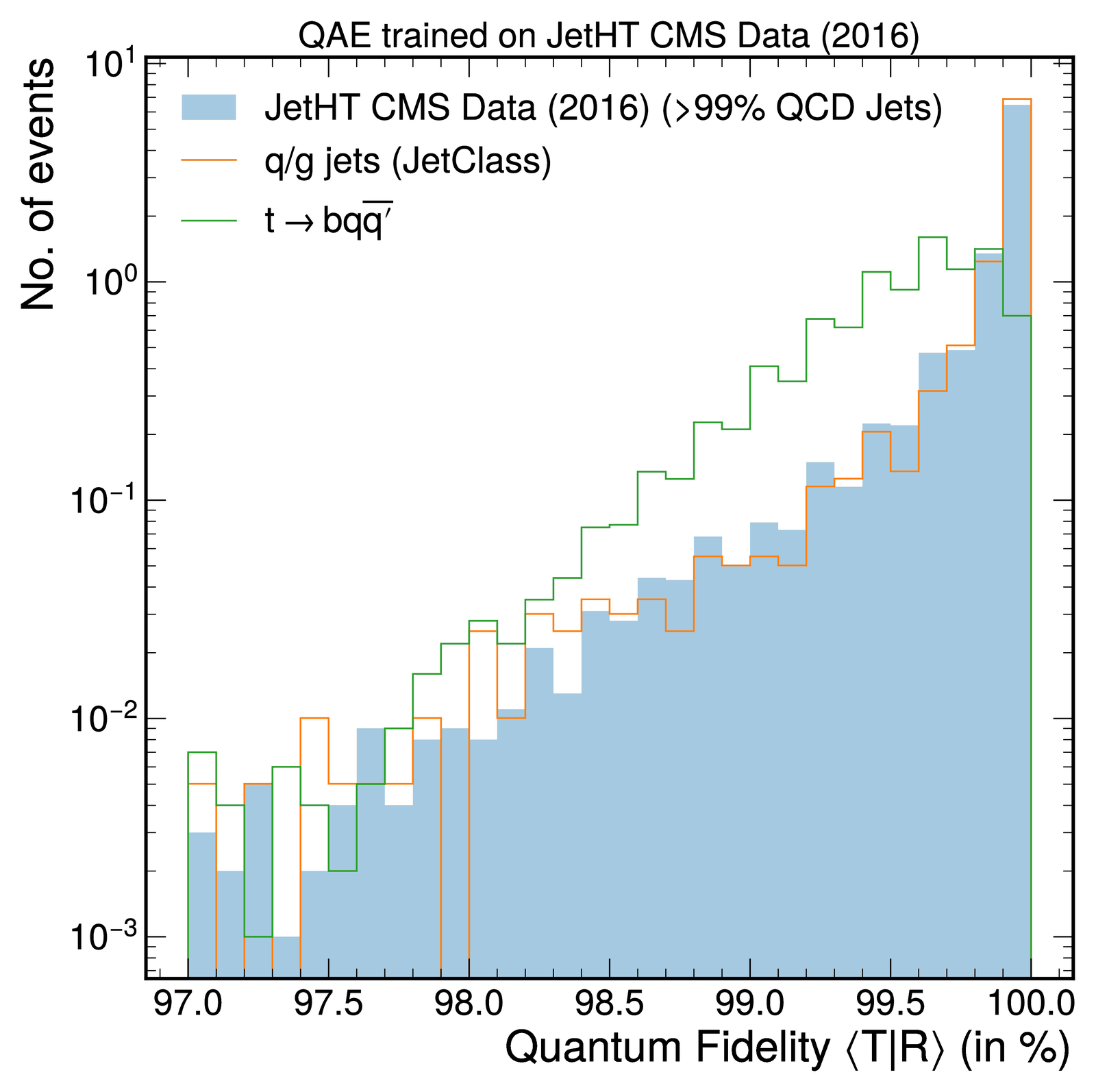
Encoding individual particles as qubits connects collider events directly to quantum algorithms. We tested this approach for jet classification and anomaly detection, including validation on real CMS data, using compact quantum models.
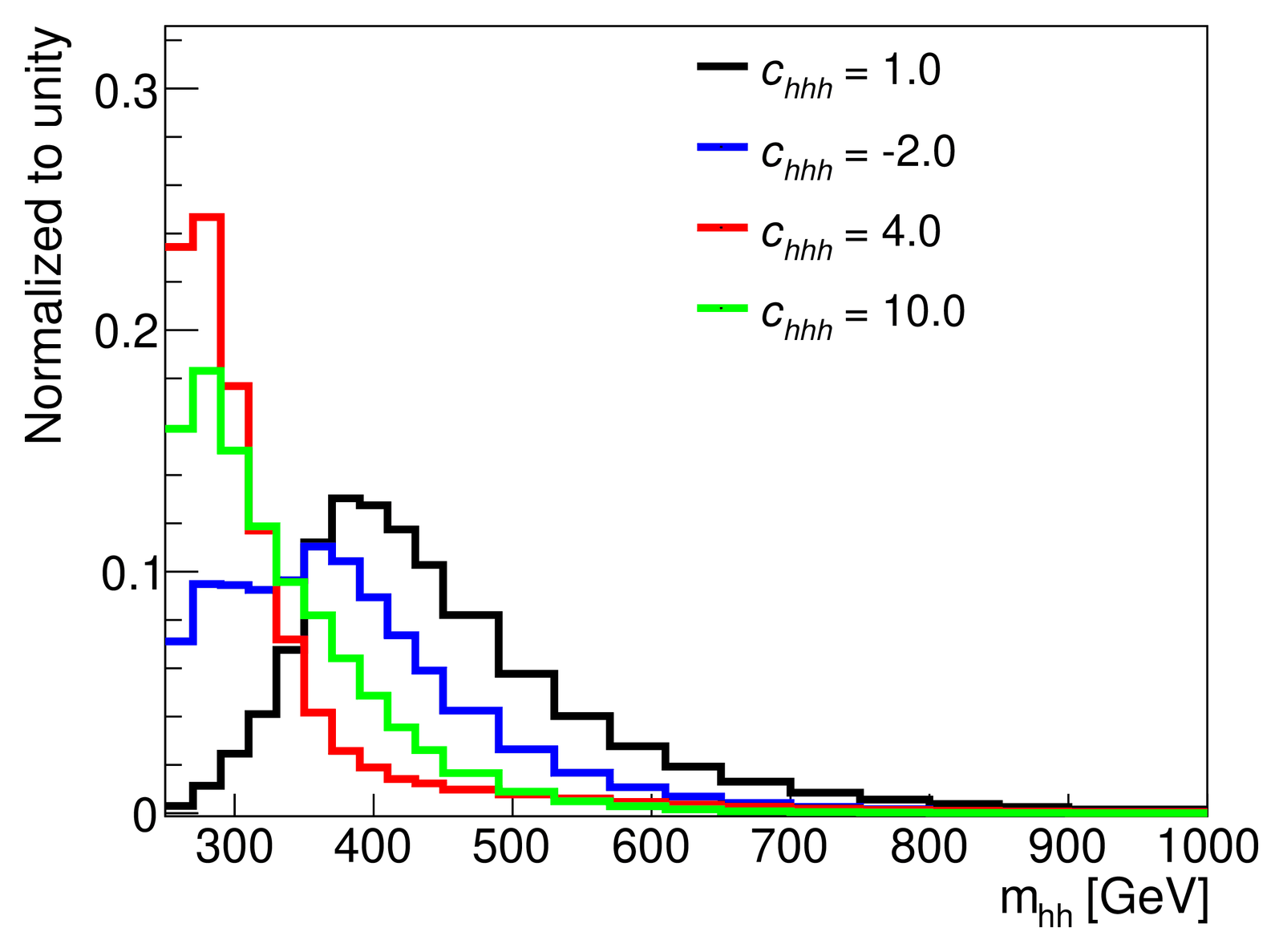
The motion of Higgs pairs carries information about interactions beyond the Standard Model. Our momentum-dependent reweighting framework extends collider analyses to Higgs effective field theory and investigates which measurements can constrain these effects.
The group of Prof. Dr. Michael Spannowsky is based at the Karlsruhe Institute of Technology (KIT) in Germany. We are affiliated with the Institute of Theoretical Physics (ITP) and the Institute for Quantum Materials and Technologies (IQMT). We study how collider experiments can test the Standard Model and search for new physics, both through direct particle production and through deviations in known processes. Effective field theory provides a systematic description of these deviations without requiring a specific model of their origin. We develop this framework and investigate which effects current and future colliders could measure.
We develop machine-learning methods that incorporate the symmetries of particle physics to improve performance with compact networks. We also study quantum machine learning and investigate how ideas from quantum information can improve the performance of large classical models. Our work on simulation spans quantum computing methods for particle showers and vacuum decay, as well as tensor-network approaches to quantum field theory. Across these directions, we use the physics of each problem to guide how we build and apply our methods.

 English
 Deutsch